
Te Puna Vai Mārama (TPVM) Director Dr Emma Ngakuravaru Powell was been welcomed as an inaugural visiting fellow at the Oceania Institute, University of Melbourne in late October 2026, further strengthening research connections between the Cook Islands and one of Australia's leading universities.
During the visit, Dr Powell delivered a public lecture titled Atiu Nui Maruarua: Life, Building and Belonging Beyond Atiu, sharing emerging findings from her research on Atiu communities and the enduring relationships that connect people across oceans, generations and places.
The presentation explored a series of community buildings established by Atiu people in Papeete, Auckland, Rarotonga and on Atiu itself from the mid-twentieth century onwards. While migration from Pacific islands is often discussed through narratives of depopulation and disconnection, Dr Powell's research invites a different perspective.
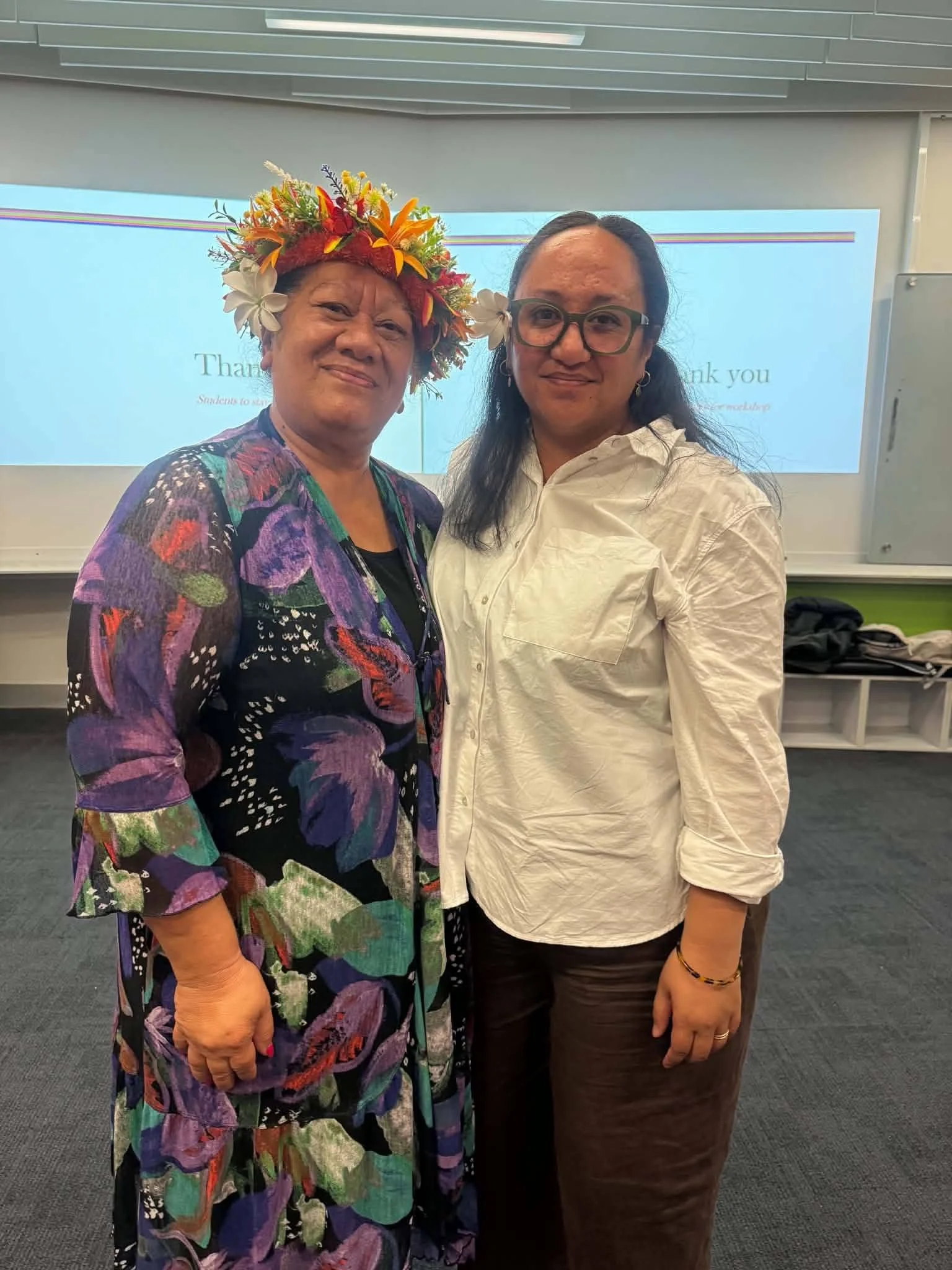
Dr Emma Powell with Cook Islands leader, Pherina Tuaiti, at the University of Melbourne. Pictured following Dr Powell’s presentation.
Rather than viewing migration as a story of loss alone, the project examines how these community spaces have enabled Atiu people living away from their home island to maintain relationships, cultural practices and collective decision-making processes. The research investigates how these buildings function as centres of kinship, performance, knowledge transmission and belonging for communities that continue to regard Atiu as the centre of their social and cultural world.
The lecture attracted strong interest from staff, students and members of Melbourne's Pacific community, highlighting growing international interest in Indigenous Pacific scholarship and community-centred approaches to research.
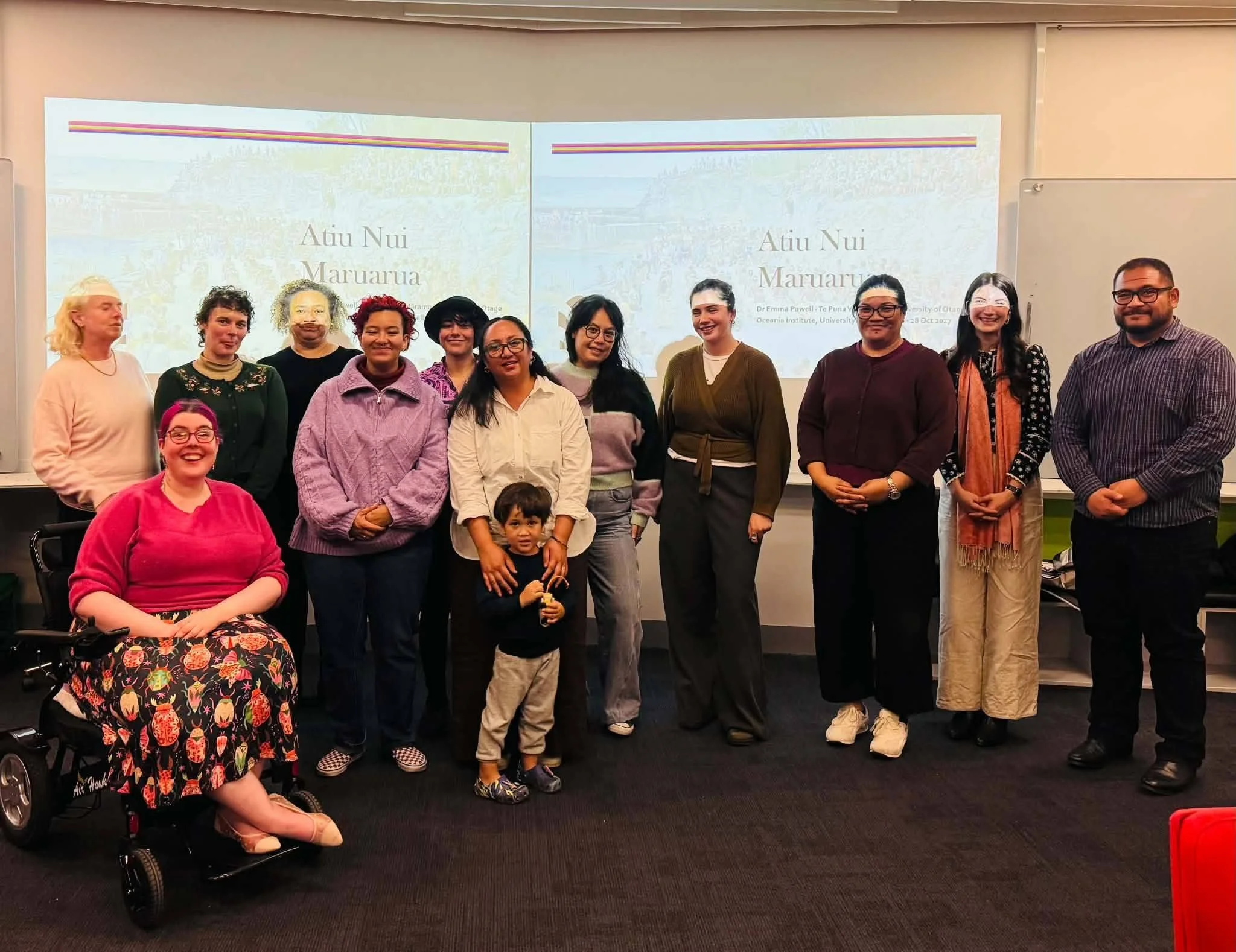
Attendees to the lecture and postgraduate workshop with Dr Powell and her son (centre front).
In addition to presenting her research, Dr Powell facilitated a postgraduate workshop with students at the University of Melbourne. Drawing on Teresia Teaiwa's influential essay, The Ancestors We Get to Choose: White Influences I Won't Deny, students engaged in thoughtful discussions about positionality, research ethics and the intellectual traditions that shape their scholarly work. Participants reflected on the genealogies of ideas, relationships and influences that inform their thinking, considering how these intellectual inheritances shape not only their research practices but also their capacity for generosity, responsibility and accountability in the work they undertake. The workshop generated rich and sustained dialogue, highlighting the continued relevance of Teaiwa's scholarship for emerging Pacific and Indigenous researchers.
The visit reflects TPVM's ongoing commitment to building international research partnerships and contributing Pacific perspectives to global academic conversations. It also provided an opportunity to showcase the innovative work being undertaken by Cook Islands researchers and to strengthen connections with scholars across the region.
Dr Powell's appointment as an inaugural visiting fellow is a significant recognition of her research contributions and of TPVM's growing reputation as a leading centre for Indigenous and Pacific research.
TPVM extends its sincere appreciation to Associate Professor Debra McDougall, Co-Director of the Oceania Institute and Associate Professor in Anthropology, and Professor Jon Barnett, Co-Director of the Oceania Institute and Professor in the School of Geography, Earth and Atmospheric Sciences, for their leadership and support of the fellowship. TPVM also acknowledges Dr Rita Seumanutafa-Palala, Oceania Institute Research Fellow, whose generosity and facilitation helped make the visit such a rewarding experience.
Special thanks are also due to Associate Professor Kalissa Alexeyeff and the wider Oceania Institute team for their warm hospitality and thoughtful engagement throughout the visit. The fellowship marks an important step in strengthening collaborative research relationships between the Cook Islands, Aotearoa New Zealand and Australia, while creating opportunities for Indigenous and Pacific scholars to learn from one another and develop new avenues for collaborative research.
As Pacific communities continue to navigate questions of migration, identity and belonging, partnerships such as these create valuable opportunities for Indigenous researchers to share knowledge, develop new collaborations and bring Pacific perspectives to international audiences.