
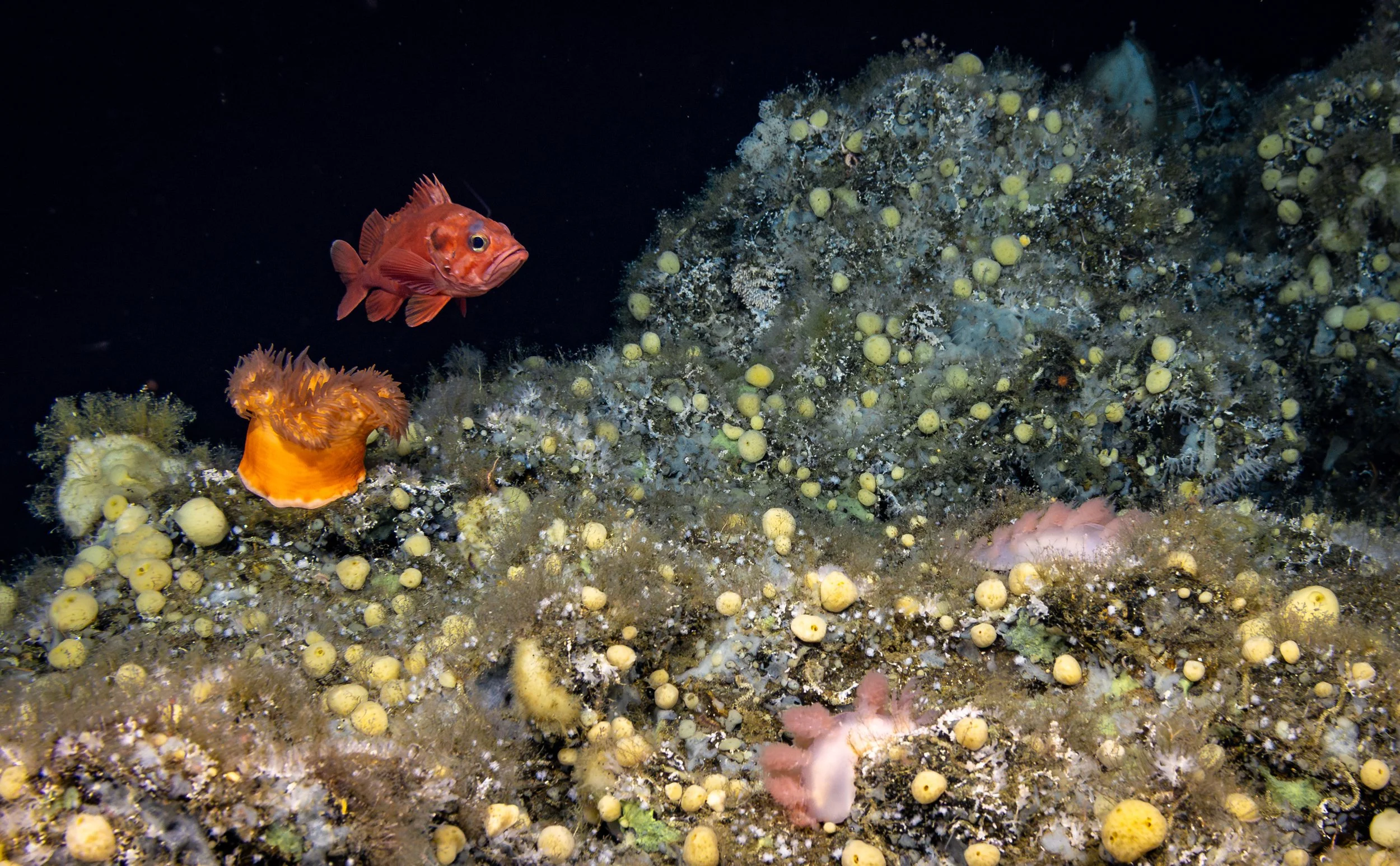
Photo Credit: NOAA Ocean Exploration, Seascape Alaska
From April to September this year, Te Puna Vai Mārama, in collaboration with Pacific environmental law expert Dr. Justin Rose, undertook consultation work for the Cook Islands government for its ratification path towards the Agreement under the United Nations Convention of the Law of the Sea on the Conservation and Sustainable Use of Marine Biological Diversity of Areas Beyond National Jurisdiction, otherwise known as the ‘BBNJ Agreement’.
The Cook Islands signed the BBNJ Agreement in 2023, and is one of 145 countries who are signatories. One hundred and four countries have since ratified, or committed to abiding by the Agreement, and the First Conference of the Parties (COP1) will be held in January 2027. As the Cook Islands has not yet ratified the BBNJ Agreement, a review of the Cook Islands’ capacity to implement the BBNJ Agreement was sought to contribute to the decision.
The BBNJ Agreement establishes mechanisms for countries to sustainably manage biodiversity and natural resources in the high seas - international areas of ocean and seafloor beyond countries’ Exclusive Economic Zones (EEZs). It is one of three international agreements developed under the UN Convention on the Law of the Sea (UNCLOS for short), and one of the longest UN agreements to be negotiated; almost 20 years. The Cook Islands is already a leader in integrated oceans management within domestic boundaries; the Marae Moana Act 2017 sets the foundation for integrated sustainable management and conservation of marine biodiversity and resources within the Cook Islands EEZ, the review found that the Cook Islands is able to extend this expertise to the high seas, particularly with regional collaboration.
The consultancy was commissioned by the National Environment Service (NES), which also co-Chairs the Marae Moana Technical Advisory Group, a key inter-agency co-ordination body that was established under the Marae Moana Act, and important to the domestic implementation of the BBNJ Agreement. The work was split into two phases; a review of domestic legislation, followed by a policy review and stakeholder consultations. A validation workshop involving public service, traditional leadership, civil society, and private sector representatives was also held at the end of the consultancy to provide a summary of the review and consultation work and gain feedback on actions in the implementation plan.
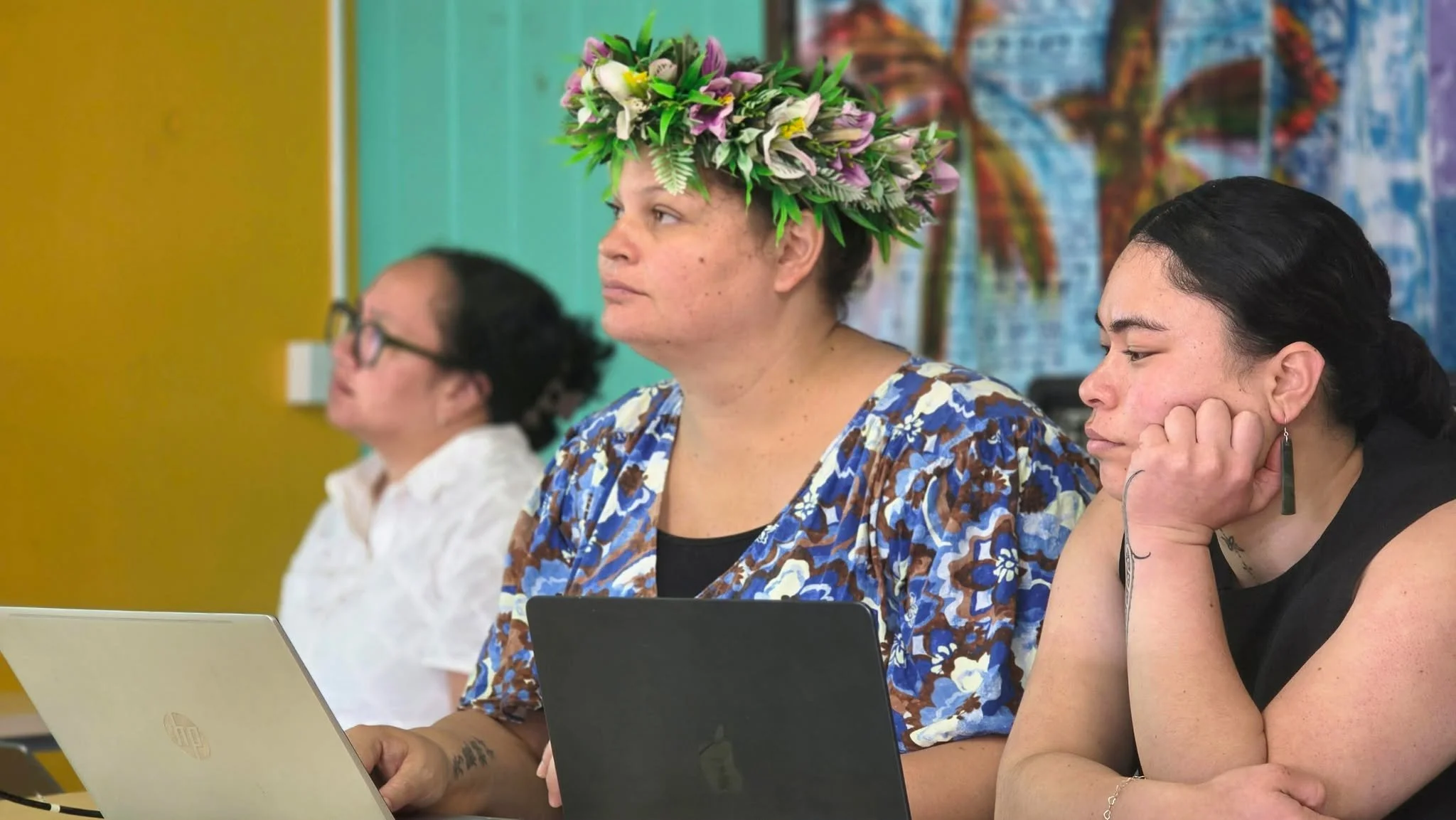
Director Emma Powell and research staff Merita Tuari’i, and Kheelan Thompson-Tonga at the validation workshop, held at USP in August, 2026.
Our Senior Research Fellow, Merita Tuari’i worked closely with Dr. Rose during the review stages, and engaged Cook Islands government agency representatives, civil society and regional organisations for consultations. TPVM also facilitated the validation workshop. The team are very grateful to Dr. Rose for his expertise and helping build local capacity on international multilateral environmental conventions, also to the NES team for providing the opportunity and attentive professionalism to the consultancy.
The key document produced from the consultancy was a final report and implementation plan laying out a summary of the context and readiness for the Cook Islands government to ratify the BBNJ Agreement, and a practical roadmap of actions towards ratification, interim arrangements, and post-COP1 implementation.
Senior Research Fellow Merita Tuari’i speaks to Cook Islands Television News about the BBNJ project.